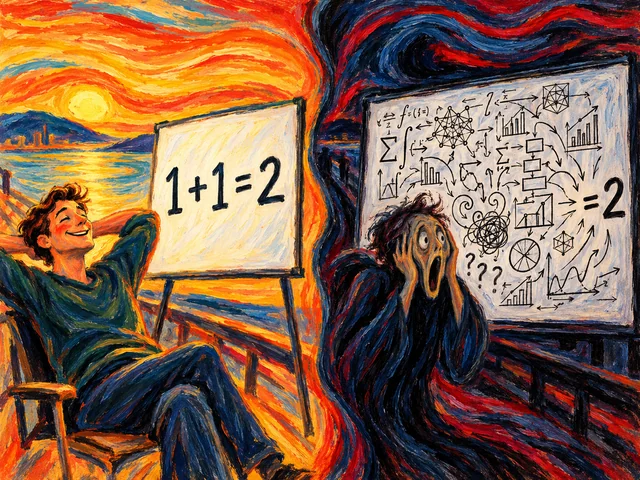


Thirty videos a month sounds productive. Until you discover that twelve are waiting for approval, eight show the wrong product, and the rest are saying the same thing in different shirts.
You did not need a larger folder. You needed an ad worth running.
AI can make production faster and help explore creative ideas. Commercial value comes from producing accurate, usable ads that answer a buyer's question, then learning which approach deserves more investment. A daily quota is useful only when your team can approve, distribute and evaluate the work.
Before buying more output, define the next decision the videos should help you make.
Start with a buying question
Imagine a retailer selling a weekend travel bag.
“Make it cinematic” gives the producer a style. It does not say why someone should buy the bag.
Start with something a customer needs to establish. Does it hold a weekend's clothes? How do the compartments work? What does it look like on an actual person? Choose a question supported by the business's real enquiries and product information.
For a capacity concept, the brief could be:
| Brief item | Proposed direction |
|---|---|
| Buyer question | Will it hold what I need for a weekend? |
| Opening | Show the items to pack beside the actual bag. |
| Evidence | Real packing sequence, correct model and verified dimensions. |
| Product details that must stay fixed | Shape, colour, compartments, logo, and proportions. |
| AI contribution to explore | A playful travel setup or transition around the demonstration. |
| Next action | View the correct product page and delivery details. |
| Business outcome | Purchases or suitable enquiries, with tracking checked. |
Approve that before asking for twenty variations. Otherwise, you can generate increasingly polished answers to the wrong question.
Show the proof with the right kind of footage
A generated packing scene cannot establish the real bag's capacity. For that, film the real bag being packed. Use AI where invention helps the idea without changing the product evidence.
The same distinction applies to food, clothes, hotel rooms and software. Show the actual thing when the customer needs to inspect what they will receive. A real demonstration can sit inside a stylised advert; every frame doesn’t need to come from the same production method.
Plan a short sequence before generation:
- Establish the question or tension.
- Show the relevant evidence.
- Connect it to the offer and next action.
For the bag, that might be a hectic packing setup, a clear real demonstration, and a final view of the product with the relevant buying route. The exact script should fit the audience and placement.
Test difficult shots early. If the concept relies on hands opening a precise compartment, find out whether that shot works before building the entire edit around it. Agree on an alternative using real footage or a simpler composition.
A commercial precedent helps explain why production efficiency deserves attention: Klarna's 2025 annual report estimates $10 million in 2024 savings from AI-powered marketing. That is a company estimate across its operations, not evidence that every generated video is cheaper or sells better. Your own production economics still need checking.
Count ideas separately from exports
“Thirty videos” could mean thirty different concepts or one idea delivered in several sizes and opening variations. Both can be useful. They are different purchases.
Agree on these terms in the brief:
- A concept: a distinct customer concern, promise and demonstration.
- A variation: a changed opening, proof element or CTA within that concept.
- An adaptation: the same ad prepared for another placement or format.
For a manageable first batch, you might commission two concepts, each with two opening variations, then adapt the approved versions to the required placements. That is a proposed scope, not an optimal quota for every business.
Ask whether the quote includes scripting, failed generation attempts, editing, audio, captions, resizing and revisions. Identify who combines feedback and who can approve the ad.
Review in stages: concept, script or boards, then edited cut. Changing the customer promise after the final export is a new direction, not a small spelling correction.
Make approval part of production
An ad is usable when:
- it meets the agreed brief
- the product is accurate
- the team can release it for its intended placement
Check the details against actual references: product shape, spoken claims, prices, captions, and destination. Confirm any music, voice, footage, or likeness can be used for the intended campaign. A synthetic presenter should not claim a customer experience that never happened.
Preview the export at phone size. Can the viewer read the offer? Do captions or platform controls cover the evidence? Is the opening understandable without the producer narrating it?
Check platform requirements before release.TikTok's advertising policy requires disclosure for fully AI-generated or significantly AI-modified media, with separate treatment for minor edits. That is a TikTok advertising requirement, not a rule for every AI-assisted edit on every platform.
If your approver can only review on Fridays, build the batch around Fridays. A daily promise will not grant them five extra working days.
Calculate the cost of an ad you can actually use
Use this calculation:
Production cost per approved ad = total batch production cost ÷ complete ads approved for the agreed use.
Here is a fictional example:
| Batch expense | Illustrative cost |
|---|---|
| Allocated tools, credits and assets | KES 6,000 |
| Briefing, generation and editing time | KES 18,000 |
| Review and revisions | KES 6,000 |
| Total | KES 30,000 |
Six approved ads cost KES 5,000 each. If only three become usable, the cost is KES 10,000 each. The failed attempts belong in the calculation too.
Google's Flow credit guidance shows that generation costs depend on the selected model or operation. Check the current settings and allowance rather than treating one prompt as one finished ad.
Keep internal time valuation separate from cash paid to suppliers. Compare equivalent work when reviewing an agency quote against an in-house estimate.
Then account for distribution. An inexpensive production can be an expensive campaign if you spend heavily showing an unclear offer. Media spend and business outcomes belong in the campaign review, not hidden inside the production cost.
Bring Attention Lasso your offer, actual assets and intended channels. We can help scope a batch around what it needs to demonstrate and what your team can test.
Give each test a question it can answer
For the first bag campaign, you might compare a capacity demonstration with a design-led concept. That tests two overall approaches. It does not isolate the effect of one opening sentence.
If a concept is promising, the next test could change only its opening while retaining the rest. Record the question, versions, intended audience, outcome, and review conditions before running it.
TikTok's split-testing guidance describes separating audiences and controlling other variables. Check that your chosen method and budget can support a useful comparison. Uneven delivery across ordinary campaign ads does not give every version an equal test.
Choose metrics that fit the decision:
| What you want to understand | Evidence to inspect |
|---|---|
| Does the opening hold attention? | Relevant viewing behaviour, alongside placement and delivery. |
| Does the demonstration create interest? | Product-page visits and feedback on the actual offer. |
| Does the campaign bring business? | Purchases or qualified enquiries, cost and subsequent outcomes. |
| Do we need more creative? | Performance trend, exposure, unused assets and test capacity. |
TikTok's creative guidance recommends performance checks and refreshing creative when delivery results show a sustained decline. That supports a response to evidence, not a universal requirement to replace an ad every morning.
Frequently asked questions
Are AI video ads cheaper than filmed ads?
They can be, particularly for certain variations or imagined scenes. Compare the full cost of approved ads, including unsuccessful attempts, editing and review. Real footage may be the cheaper and more convincing way to demonstrate the actual product.
How many video ads should I make each month?
Make enough to answer the next useful creative question and support your distribution plan. Start with a manageable batch, then expand when approval and testing keep pace. A folder full of unused exports is a reason to review the schedule.
Can I use AI for the whole advert?
Yes, when the concept suits it, and the finished ad represents the offer accurately. Use real evidence where buyers need to inspect product behaviour or results. Check the platform's disclosure requirements and permissions for supplied assets before release.
Why do AI ads still take so much editing?
Generation produces footage, not necessarily a finished argument. Someone must select takes, maintain continuity, verify claims, and shape the sequence. A script and reference assets reduce avoidable rework before the first generation starts.
What should I ask an AI video producer to deliver?
Specify concepts, variations, placements, duration, audio, captions, and revision stages. Agree what makes an export usable and who approves it. If you need project files or reusable assets, include those in the scope and clarify licence limits.
How do I know whether an ad is working?
Judge it against its assigned job. Viewing metrics can diagnose an opening; qualified enquiries or purchases help assess the commercial outcome. Verify the destination and tracking too. An attractive ad cannot complete a purchase through a broken page.
Produce the next useful ad
Choose one buying question, gather the evidence, and commission a batch you can actually use. Then let the results inform the next brief.
Share the product, the question and your existing assets with Attention Lasso. We can help turn them into a practical production and testing plan.
Keep pulling the thread
Related reading
Your blog gets visitors. Why is the inbox so quiet?
Read next
Lovable wants to do your marketing. Should you break up with your agency?
Read next