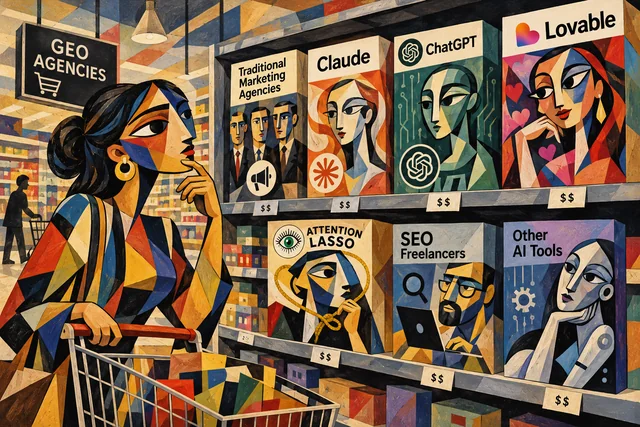

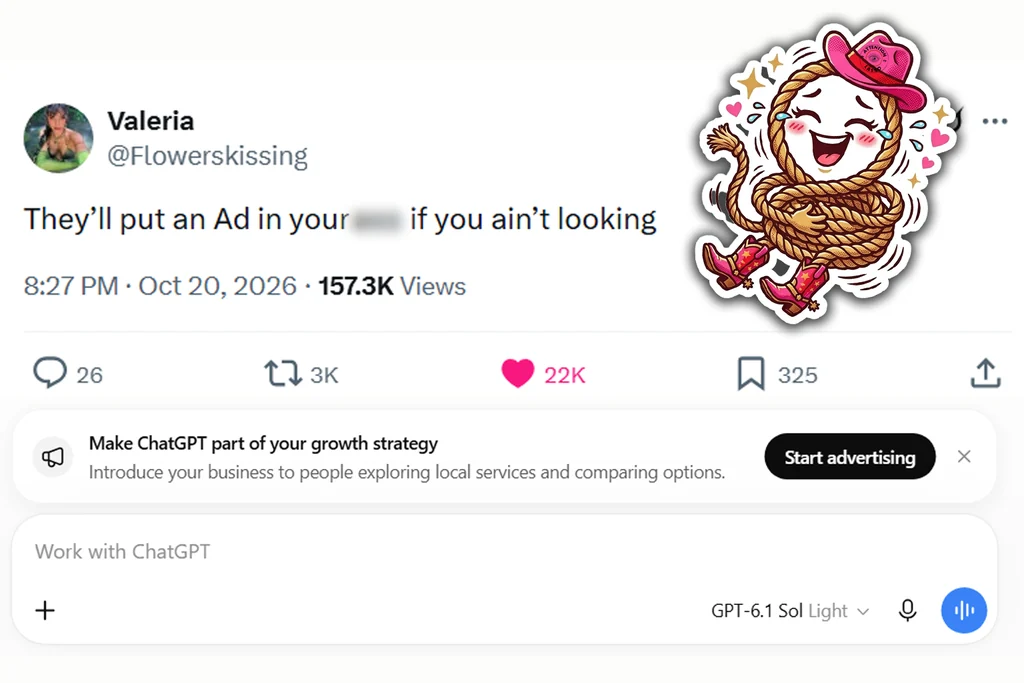
Como thrashed Manchester United. And ChatGPT advertising is now available to Kenyan businesses. Events that you probably saw coming.
Your customer used to ask Google for options, WhatsApp a friend for an opinion, and then ‘ghost’ for three days to “think about it”.
Now they can do most of that in one ChatGPT conversation. The ghosting remains a personal choice.
They might explain their budget, compare alternatives, ask what could go wrong, and narrow the shortlist before opening your website. For a business, there is an obvious appeal: showing up while someone is working towards a purchase.
Advertisers in Kenya can sign up for OpenAI’s Ads Manager on a self-service basis on the condition that the business running the ads and paying for them is based in a supported country.
That opens a new route to potential customers. It also creates a new opportunity to pay for traffic that looks impressive but does very little.
The ChatGPT ads US experience gives us useful evidence for deciding which outcome we are buying.
What is available in Kenya?
Kenyan businesses can use the self-service advertising route and seek to reach eligible users locally. Ensure you confirm the location is selectable and your account is cleared to deliver before committing to a launch date. OpenAI's country availability list is the reference to check as access develops.
The audience is narrower than “everyone who uses ChatGPT”. Ads may appear on Free and Go. Plus, Pro, Business, Enterprise, and Edu are ad-free, and accounts identified as belonging to under-18s don’t receive ads.
That matters if you sell specialist software to teams whose work happens inside paid business accounts. The people you want might use ChatGPT all day and never see your campaign.
Ads are clearly labelled, separate from the answer, and do not buy influence over what ChatGPT says. Advertisers don’t receive users' private conversations. OpenAI explains these boundaries in its ads overview.
So “we will pay to make ChatGPT recommend your company” is a terrible service promise. You are buying advertising space. If you want your company included in the answer itself, that calls for a different approach.
Should you invest in GEO instead of ads?
If your goal is unpaid mentions and citations in AI answers, consider GEO before buying ads. Generative engine optimisation works on how clearly your business, expertise, and offers can be found, understood, and supported by credible sources.
Our SEO, AEO, and GEO services cover that discovery work, including useful content, technical fixes, and structured business information. We can assess where your brand is missing and which changes deserve priority. No agency can guarantee an organic mention, a particular answer, or a permanent position.
The budget decision follows the job:
| What you want to achieve | Where I would start |
|---|---|
| Make your business easier to discover and consider in unpaid AI answers | GEO, with a recorded baseline and a consistent set of relevant buyer questions. |
| Test whether a specific offer wins customers through sponsored placements | A capped ChatGPT ads campaign with working conversion measurement. |
| Improve organic discovery while testing paid demand | Both, with separate budgets and reporting so paid traffic does not get counted as organic progress. |
For example, a chair retailer might improve its product dimensions, delivery information, and comparison content for organic discovery while testing ads for one compact-office range. The information helps buyers in either journey; you still need to measure the results separately.
GEO takes work and investment too. It may deserve priority when your product pages barely explain the offer or your business information is inconsistent. Ads become more useful when there is a clear, measurable offer ready to receive the visitor.
Which business categories have already tried ChatGPT ads?
You would not be the first retailer, software business, or travel company to explore it. Recognisable brands have participated across several categories.
OpenAI's advertiser page features Newegg, Best Buy, Lowe’s, and VistaPrint. WPP’s US pilot announcement names Adobe, Ford, Mazda, Audible, and Audemars Piguet. The table adds brand announcements and observed placements where available.
| Category | Documented advertiser examples | A buying situation a Kenyan business could explore |
|---|---|---|
| Electronics and technology retail | Best Buy; Newegg | Comparing laptops, appliances, or devices within a budget. |
| Home improvement | Lowe’s | Planning a repair or deciding which materials a project needs. |
| General retail and household shopping | Target and its Roundel partners | Choosing household products for a particular task or occasion. |
| Software and digital tools | Adobe, including Acrobat Studio and Firefly | Comparing tools for document work or creative production. |
| Food, meal kits, and prepared meals | HelloFresh and Factor | Finding convenient meal options that suit a routine. |
| Automotive | Ford; Mazda | Comparing vehicles against space, use, and ownership needs. |
| Audiobooks and entertainment | Audible | Choosing what to listen to or exploring a new interest. |
| Luxury goods | Audemars Piguet | Researching a considered purchase and comparing distinctive features. |
| Printing, design, and business supplies | VistaPrint | Preparing signage, packaging, or promotional materials for a launch. |
| Travel and mobility | Expedia; Enterprise Mobility, documented in Adthena’s early ad observations | Planning a trip, comparing accommodation, or arranging transport. |
The buying situations are suggestions for your brief, not the brands’ disclosed targeting or evidence of Kenyan demand. Pilot participation and observed ads establish that a category has been tried; they do not establish that every named campaign is still running or made a profit.
Seeing Ford in the table is permission to investigate, not a reason to spend like Ford. Pick the buying decision that resembles your customer's, then check your own margins and eligibility.
What early advertisers actually achieved
The useful question isn’t whether your competitor is running ads on ChatGPT. It’s what happened after they paid.
Below are published advertiser and partner accounts, not Kenyan benchmarks or Attention Lasso results. The June tests also predate later changes to bidding and measurement.
SE Ranking: 1,263 clicks, almost no sign-ups
SE Ranking tested three campaigns, eight ad groups, and 48 ads across the US, Canada, Australia, and New Zealand in June 2026. Its firsthand account reports 97,131 impressions, 1,263 clicks, and a 1.30% click-through rate.
The campaign produced almost no sign-ups. The company stopped before using its full planned budget.
This is the case to keep beside any exciting screenshot of rising traffic. A click confirms that somebody opened the door. It does not confirm they wanted what was inside.
Apply it: Choose the valuable action before launch. For a retailer, that might be a completed purchase. For a venue, it might be an enquiry with a date, guest count, and realistic budget. Report that result beside clicks from the first review.
VSSL: useful creative clues, uneven delivery
In a small two-week test, US agency VSSL reported $400 spent, a 0.53% click-through rate, an $11.65 cost per click, and a $61.62 cost per thousand impressions.
Its best headline was a straightforward description of the service rather than a direct call to action. It also spent only about 40% of a $1,000 lifetime budget.
Neither finding is a universal rule. One is a creative hypothesis worth testing; the other shows that setting a budget does not guarantee enough delivery to evaluate a campaign.
Apply it: Test a clear offer statement against an action-led alternative. Inspect impressions and actual spend before concluding that the offer failed. A campaign with barely any exposure has told you very little about customer demand.
Synter: the same advertiser, very different click costs
Synter's June account data separates results by country. Its US campaign recorded 103,133 impressions, 337 clicks, and $3,577.61 in spend: a 0.33% click-through rate and $10.62 per click.
The UK campaign reported $5.10 per click, with much smaller volume. The campaigns also had different time in market, so this was not a controlled country comparison.
It still demonstrates why importing a foreign cost benchmark is risky. Even one advertiser's results varied substantially across markets.
Apply it: Use the US figures to understand possible failure points. Build your Kenyan cost assumptions from your own delivery and sales records. Cheap clicks abroad do not make a local forecast.
WeightWatchers: encouraging acquisition evidence, with a specific comparison
The outlook isn’t all bleak. Positive results exist. In its October measurement announcement, OpenAI reports DV Rockerbox's finding that WeightWatchers' attributed acquisition cost was 15.3% below its blended paid-search benchmark.
That is more commercially useful than an impression count. It is still an advertiser-specific, attributed comparison. The announcement does not provide the full spend, sample, or margin calculation needed to turn it into a forecast for your business.
Apply it: Compare your acquisition cost against your own established channels using the same conversion definition and reporting window. A purchase compared with a purchase tells you more than an enquiry compared with a sale.
Taken together, these accounts support a sensible test. They do not support announcing that Google Ads is dead, moving the entire budget, and hoping the accounts department enjoys surprises.
Who should consider a test?
Start with the offer, the buyer, and the cost of winning that buyer.
| Business situation | My starting recommendation |
|---|---|
| A retailer with online checkout, measurable margins, and several products customers compare | Consider one focused product-category test. |
| A hotel or tour operator with a clear package and a reliable enquiry process | Consider a test around a specific trip or booking decision. |
| An education or digital-product business with a useful landing page and trackable sign-ups | Check audience fit and policy, then test one offer. |
| A local service that can only serve a small area | Confirm the available geographic controls first. National traffic may be wasteful. |
| A business unable to say which enquiries become customers | Fix that measurement gap before adding another source. |
| A business needing immediate, predictable sales from its last available budget | Prioritise its proven acquisition route. This is still a new local channel. |
These are recommendations for assessing fit, not claims that those sectors already perform well locally.
Also check the current advertising policies. Betting, political advertising, and alcohol promotions are disallowed. Financial and health services outside the US are generally prohibited under the current rules; some regulated categories have limited, case-by-case approvals.
A business being legally allowed to operate does not automatically make its offer eligible here. Read the rules against the actual ad and destination page, rather than just the company name.
Build a campaign around a buying situation
Imagine a Kenyan retailer selling office chairs with nationwide delivery. Its existing campaign says:
Quality office furniture at affordable prices. Shop now.
Fine. Also approximately what every other furniture business says before you have finished scrolling.
Now picture the customer asking:
I work from a small apartment. I need an office chair that fits under my desk, stays within my budget, and can be delivered to Nakuru. What should I compare?
The useful campaign brief has much more to work with: limited space, measurements, price, and delivery.
I would start with two buying situations:
| Ad group | Context to describe | What the page must answer |
|---|---|---|
| Compact home office | Buyers comparing chairs for small rooms and limited desk clearance | Dimensions, adjustable features, price, and delivery coverage. |
| Small-team purchase | Buyers furnishing several workstations within a fixed budget | Available stock, quantities, delivery timing, and quote process. |
These are proposed test inputs. They are not known ChatGPT search volumes.
Context hints describe relevant situations; they do not reserve an exact prompt. OpenAI's advertiser basics explains that matching also considers the landing page and ad content.
For the compact-office group, try a statement such as “Office chairs for smaller workspaces” against an alternative such as “Compare chairs by size and budget”. Both should lead to an appropriate selection, not a homepage featuring every desk, lamp, sofa, and executive throne in the warehouse.
Before launch, check the page on a phone:
- Can the visitor see the price and dimensions without hunting?
- Is delivery coverage clear, including charges or how to obtain them?
- Are stock, assembly, returns, and payment information easy to find?
- Does the page carry the promise made in the ad?
- Can someone finish the purchase or send a useful enquiry?
Our landing-page guide shows how to test whether a page answers the buyer's questions without a salesperson standing beside it.
Work out what you can afford
The price of a click is only interesting once you know what a customer is worth.
Here is a fictional planning example for that chair retailer. All figures are assumptions in KES, not platform prices or exchange-rate conversions.
| Input | Assumed amount |
|---|---|
| Contribution per fulfilled order, after product and variable fulfilment costs | 6,000 |
| Contribution the business wants to retain after acquisition | 3,000 |
| Maximum total acquisition cost per order | 3,000 |
| Allowance for management and creative costs per acquired order | 500 |
| Remaining media allowance per order | 2,500 |
| Assumed click-to-order conversion rate | 2% |
| Maximum sustainable media cost per click | 50 |
The final calculation is KES 2,500 × 2% = KES 50 per click.
If actual clicks cost KES 250, the same 2% purchase rate implies KES 12,500 in media spend per order. That exceeds the KES 6,000 contribution before we even count management.
At that point, “but it's AI” is unlikely to comfort the owner.
You would need a better conversion rate, a more valuable order, a lower acquisition cost, or a different offer. Do not assume repeat purchases will rescue the calculation unless repeat purchasing is supported by your records.
For lead generation, include the close rate too:
Affordable media cost per lead = media allowance per customer × lead-to-customer rate.
A media allowance of KES 10,000 per customer and a 10% close rate gives KES 1,000 per lead. A cheaper unqualified enquiry is not automatically an improvement.
OpenAI's campaign guide lists minimum budgets by billing currency; USD accounts currently have a $25 minimum daily budget. That is a platform minimum, not a recommended test size or Kenya-specific price. Daily budgets are averages and can spend up to twice the selected amount on an individual day, within the documented weekly limits.
Confirm your account's currency and controls. Include media, management, creative work, and payment-related costs in the overall test ceiling. If the minimum viable test exceeds what the business can afford to learn from, wait.
Launch with a decision to make
For the chair retailer, I would write the pilot brief before touching the campaign builder:
Question: Can the compact-office offer acquire fulfilled orders within our agreed total acquisition allowance?
Scope: One product category, two buying situations, two ad variations per group, and one relevant landing-page journey.
Limits: A written media ceiling, separate service fee, named approver, and a review date. Check account minimums before agreeing the amount.
Primary result: Fulfilled orders and their contribution after campaign costs.
Supporting signals: Delivery, clicks, purchase rate, cancellations, and stock problems.
A two-week initial review can uncover delivery and tracking problems. It is not a promise of statistical certainty or enough sales to judge the channel. The required volume depends on conversion rates and the size of the decision.
Set up the account and measurement
Use a business-controlled account and billing profile. Invite the people managing the campaign rather than sharing passwords. The official quickstart covers verification, billing, campaign creation, and review.
Select eligible countries deliberately. Check whether the location options available in your account are sufficiently precise for your delivery area. A mention of “Westlands” in ad copy is not a geographic restriction.
Then complete a real test purchase or enquiry through the landing-page journey before buying traffic:
- Add a distinct campaign URL, for example
utm_source=chatgpt&utm_medium=paid&utm_campaign=compact_office_ke. - Configure and test the relevant conversion measurement, using appropriate consent and data handling. Add Pixel or Conversions API where suitable.
- Make sure a successful purchase or submission is recorded once. A button click is a separate event.
- Retain the campaign source with the order or enquiry wherever your systems permit.
- Compare recorded orders with payments, cancellations, and fulfilment.
For WhatsApp enquiries, record conversation outcomes and eventual orders. Opening WhatsApp does not mean someone sent a message, much less bought a chair.
OpenAI's measurement update distinguishes click-through and view-through attribution from incrementality testing. A dashboard may credit an ad after an impression without a click. Report that separately from click-based results and actual additional sales.
For a small pilot, reconcile the available records and state what remains uncertain. You do not need an enterprise measurement stack to avoid calling every attributed purchase a proven extra customer.
Decide what the evidence justifies
| What happens | What to inspect or change |
|---|---|
| Little or no delivery | Approval, billing, dates, locations, bids, and whether the buying context is too narrow. |
| Delivery but few clicks | Whether the offer is clear and relevant; test one message change. |
| Clicks but no meaningful actions | Tracking, landing-page continuity, price, mobile usability, and checkout. |
| Plenty of enquiries but poor fit | Ad promise, qualifying information, service area, and follow-up records. |
| Orders but unacceptable acquisition cost | Margin, cancellations, conversion rate, and total costs before adding budget. |
| Profitable orders at useful volume | Increase cautiously and check whether economics hold as spend rises. |
Use this review process to decide what to fix. Avoid changing bids, audiences, headlines, and the entire page at once, then claiming to know which change worked.
Frequently asked questions
Can Kenyan businesses advertise on ChatGPT now?
Yes. Kenya is listed for self-service Ads Manager access. Your business still needs to complete the relevant account, billing, verification, and ad-review requirements before campaigns can deliver.
Will every ChatGPT user in Kenya see my ads?
No. Eligible Free and Go users may see ads; paid ad-free plans and accounts identified as under 18 are excluded. Delivery also depends on relevance, available inventory, and campaign eligibility.
How much do ChatGPT ads cost in Kenya?
There is no reliable Kenya-wide CPC or acquisition benchmark in the evidence reviewed here. Pricing depends on the buying model and auction. Calculate an affordable customer acquisition cost, then test against it rather than borrowing US rates.
Can I target Nairobi or a smaller service area?
Check the location selector in your account. Sub-country options vary by market and campaign type; new product-feed campaigns are country-only. Do not promise precise local coverage until the required locations are supported.
Does paying for ads make ChatGPT recommend my business?
No. Advertising buys a labelled placement, separate from ChatGPT's answer. Improving your chances of appearing in an unpaid answer requires separate visibility work and carries no guarantee of inclusion.
Can I see the conversations that triggered my ad?
No. Advertisers do not receive users' private chats. Assess performance through available reporting and your own enquiry or sales records, rather than expecting a transcript of the buyer's conversation.
Does a Conversions campaign mean I only pay when someone buys?
No. Conversion optimisation changes the outcome the system pursues. Depending on the supported billing option, you still pay for valid clicks or impressions, including those that do not produce a sale.
Should I stop Google or Meta ads to fund this?
Keep profitable campaigns working while you assess the new channel. Use a separately capped experiment and compare customer acquisition economics before moving substantial spend.
Can betting companies or political candidates advertise here?
No. Betting promotions and political advertising are disallowed under the current policies. Alcohol promotions are also excluded. Check eligibility before paying anyone to prepare a campaign.
Can I launch it myself, or do I need an agency?
You can use self-service Ads Manager yourself. An agency earns its fee by improving the offer, setup, measurement, and decisions. Access to the platform alone is a weak reason to pay someone.
Should I choose GEO or ChatGPT ads?
Choose GEO if the priority is improving unpaid discovery and mentions in AI answers. Choose an ad test if you have a specific offer and want to measure paid acquisition. You can use both, but keep their costs and results separate. Neither guarantees a recommendation or sale.
Are well-known brands already advertising on ChatGPT?
Yes. Documented advertisers and pilot participants include Best Buy, Target, Adobe, Ford, HelloFresh, and Expedia. Their participation shows several categories are being tested; it does not prove the same campaign would work for your business.
How Attention Lasso can help
A new advertising channel does not need another person promising to “unlock its potential”. It needs someone who can tell you what to test, what it costs, and whether the result deserves more money.
Attention Lasso can help Kenyan businesses prepare and manage a focused ChatGPT advertising pilot:
- Assess the opportunity: Check policy eligibility, audience fit, account access, and acquisition economics.
- Prepare the buying journey: Build the campaign brief, relevant ad variations, and a landing page that answers the buyer's next questions.
- Connect the records: Set up appropriate tracking and a practical route from enquiry to qualified opportunity or sale.
- Manage the test: Monitor delivery, document changes, and report outcomes against an agreed spending limit.
- Recommend the next move: Continue, fix a specific problem, or stop based on the evidence.
Your advertising spend and our service fee are quoted separately. The account stays under your business's control, with an agreed scope and approval process.
We are offering this service as the channel opens locally. The international results discussed above belong to the named advertisers; they are not our client results.
If your business is ready to test ChatGPT ads, tell us what you sell, where you serve customers, and what a worthwhile new customer looks like. We will start there.
Keep pulling the thread